

Keynote Speakers
The AIDT 2026 conference features internationally recognized experts in artificial intelligence, simulation, digital transformation, and socio-technical systems.
From AI Hype to Business Value: Building an AI Strategy That Actually Works
Many companies are racing into AI without a clear strategy, resulting in pilots that don’t scale, fragmented tools, and rising risk exposure. The root causes are rarely technical; they stem from misaligned goals, immature data foundations, weak change management, and superficial governance.
This keynote reframes AI as an enterprise capability—anchored in business outcomes, powered by robust data and operating models, and governed by risk-by-design. Attendees will learn a practical playbook to move beyond demos: choose the right problems, prepare people and processes, architect integration, and institutionalize responsible AI practices so AI compounds value instead of compounding complexity.
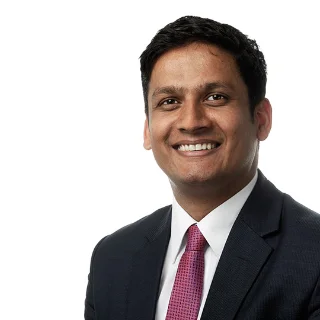
Deepak Dhungana is Head of the Institute for Digitalisation and Informatics and Programme Director for Informatics at IMC Krems University of Applied Sciences in Austria, where he leads teaching and research at the intersection of informatics and digital transformation.
Before joining IMC Krems, he spent several years in industry, including senior roles at Siemens focused on artificial intelligence and data-driven technologies, bridging academic research and real-world innovation. His work spans AI, responsible digitalisation, and applied computer science, and he is actively involved in public dialogue and education on how AI can be used responsibly and sustainably in business and society.
Large Language Models: Architecture, Capabilities, and the Road to Domain-Specific AI

Head of AI Laboratory, MegaSec Company
Large Language Models (LLMs) have rapidly become the central drivers of modern AI, enabling unprecedented progress in reasoning, generation, multimodal understanding, and task automation. Their transformative impact reaches across sectors—from education and public services to cybersecurity, governance, and enterprise workflows.
In this keynote, I will discuss the foundations of LLMs, beginning with their core architecture based on the Transformer, the role of large-scale pretraining, and the methods used for fine-tuning, alignment, and safety, including supervised fine-tuning, LoRA/QLoRA, RLHF, and DPO.
I will also examine emerging trends such as agentic AI, model distillation, retrieval-augmented generation (RAG), and the shift toward efficient small and domain-specific LLMs. Special attention will be given to low-resource languages and the unique challenges and opportunities for developing localized LLMs for Azerbaijani and the broader Turkic language family.
Finally, real-world examples from academic and industrial projects will illustrate how LLMs can be deployed responsibly and effectively in national-scale applications—including speech technologies, digital government, security, and citizen services—highlighting key lessons and strategic directions for future development.
Samir Rustamov is an Assistant Professor at ADA University’s School of IT & Engineering and Head of the AI Laboratory at MegaSec Company. He received his Ph.D. in Computer Science from the Institute of Cybernetics and later served as a post-doctoral researcher at the Georgia Institute of Technology in the United States.
His research focuses on natural language processing, speech technologies, large language models, and AI systems for low-resource languages. Dr. Rustamov has led numerous national-scale AI initiatives in collaboration with government agencies and industry, including projects on intelligent speech recognition, video analytics, and domain-specific LLM development.
He has published extensively in international venues and is actively engaged in AI strategy, digital transformation, and mentoring young researchers within Azerbaijan’s growing AI ecosystem.
From Understanding to Trust: The Power of Neuro-Symbolic Intelligence

Research Centre in AI, Robotics and Human-Machine Systems (IROHMS)
This keynote explores how neuro-symbolic AI can make robots more helpful, trustworthy, and intuitive for people to work with. Neuro-symbolic AI blends two powerful approaches: neural networks, which help robots see and recognise patterns in complex, changing environments, and symbolic reasoning, which gives them structured knowledge, logical thinking, and an understanding of human goals and context.
The talk shares examples from recent projects at Cardiff’s Research Centre in AI, Robotics and Human-Machine Systems (IROHMS). In these projects, neuro-symbolic AI helps robots better understand both the obvious and more subtle aspects of human behaviour, leading to smoother and safer collaboration.
A key benefit of this approach is that it makes robot decision-making more transparent, which can build trust and confidence. It also allows robots to learn from new data while still following clear rules, helping them stay safe, reliable, and aligned with human values—especially important in fields where safety and ethics matter.
Finally, the keynote discusses how neuro-symbolic AI could increase productivity and reshape roles across industry, education, and public services.
Professor Rossi Setchi is Fellow of the Learned Society of Wales and Professor of High-Value Manufacturing at the School of Engineering. She is Director of the Research Centre in AI, Robotics and Human-Machine Systems (IROHMS). She has a distinguished track record of research in a range of areas including AI, robotics, systems engineering, Cyber-Physical Systems and Industry 4.0, and, in particular, has built an international reputation for excellence in knowledge-driven symbolic AI, computational semantics and human-machine systems.
Professor Setchi has worked with more than 180 co-authors and contributed over 300 peer-reviewed publications, secured external grant support totalling more than £26 million and supervised to successful completion more than 30 PhD students. She has collaborated with over 20 UK and 30 overseas universities, and more than 50 research organisations and industrial companies from more than 20 countries in Europe, Asia and Australia.
She has provided research leadership on over 30 collaborative projects funded by UK and overseas funding bodies, including the Royal Society, Royal Academy of Engineering, EPSRC and the European Commission.
EIDA / AIKON: Building a Platform Leveraging Computer Vision Algorithms for Historical Data
Institut Français d'Études Anatoliennes (UMR 3131)
By creating digital humanities tools for researchers in history of science, the EIDA project – started in February 2023 – incorporates artificial intelligence into the study and analysis of a corpus of manuscripts of Ptolemaic tradition and early prints of mathematical astronomy. With the help of computer vision algorithms to accelerate specific steps (such as visual elements extraction, clustering, and vectorization) of the processing of the sources, EIDA opens new perspectives for the study of astral diagrams. The information system created for the project, based on a data model enabling the detailed description of the sources, will provide a diversity of tools dedicated to the exploration, analysis, and edition of diagrams in historical sources.
This presentation synthesizes how computer vision algorithms can be integrated to the work of historians and automate multiple steps of the processing of their source material, and how digital tools can be built in collaboration with researchers to both support their work and lay the groundwork for a public platform featuring reusable resources.
The development of these tools enable their application to various academic research projects currently underway at UFAZ. They prove invaluable in classifying and synthesising historical data stored on various media (written files, typed files, Word files, etc.), and processing images such as cartographic records to extract relevant information.
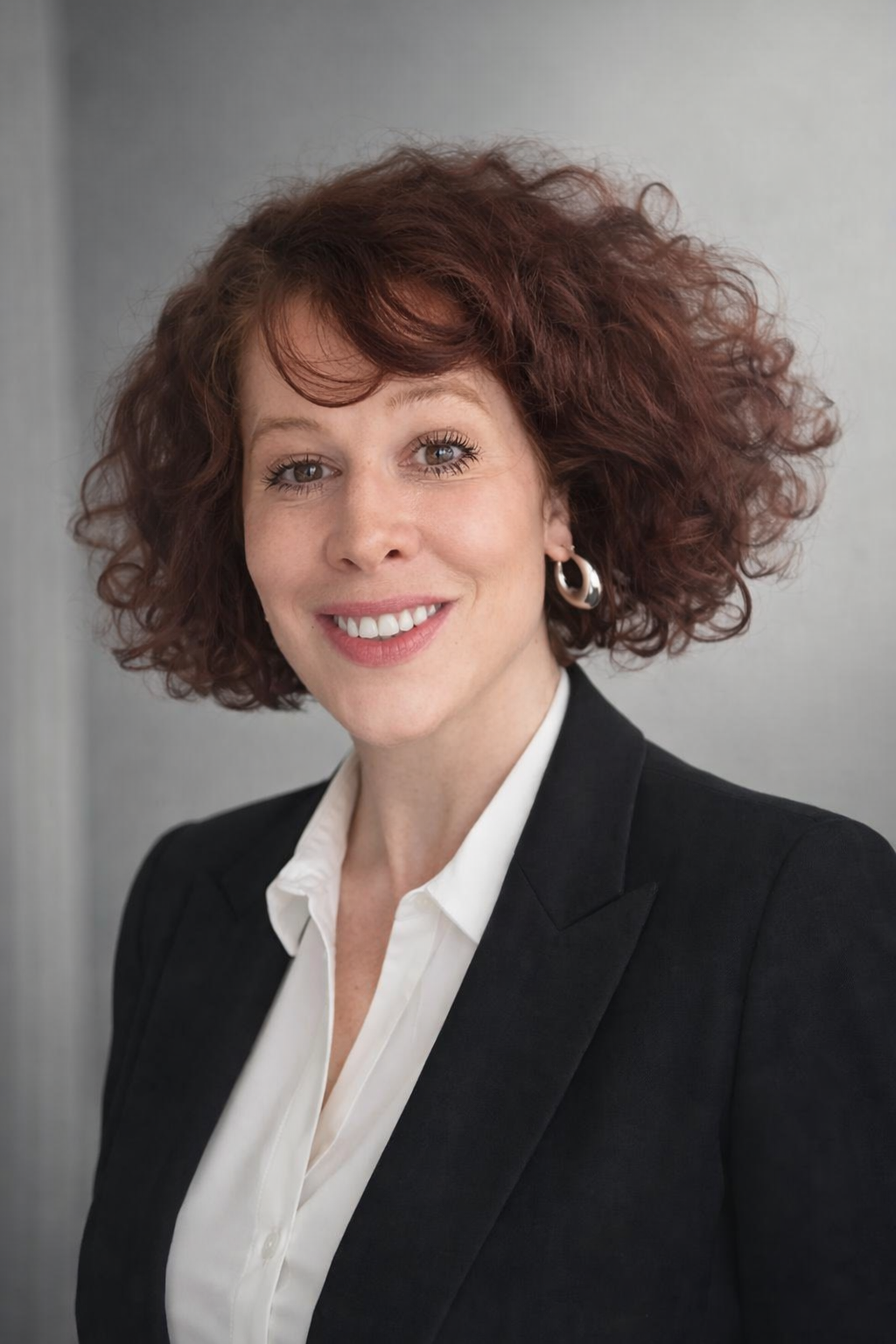
Florence Somer holds a PhD in Anthropology and the History of Religions (EPHE/PSL), with a strong focus on the philosophy and history of astronomical and astrological sciences. Her research explores the transmission of scientific knowledge across Persian, Arabic, and Ottoman Turkish sources, tracing intellectual exchanges from the Sasanian Empire to the Indian and Chinese worlds, the early Arab caliphates, and the Ottoman Empire.
She is currently a researcher in the History of Astronomy Department at the Paris Observatory, working within the EIDA project (Editing and Analyzing Historical Astronomical Diagrams with Artificial Intelligence). In this framework, she coordinates a multidisciplinary team—engineers, computer vision specialists, and historians of science—dedicated to producing detailed labels and annotations for a corpus of astronomical diagrams drawn from sources in Latin, Greek, Sanskrit, Chinese, Persian, Arabic, and Ottoman Turkish.
Her work brings together historical scholarship and cutting-edge AI methodologies to deepen our understanding of scientific visualization and knowledge transmission across cultures and centuries.
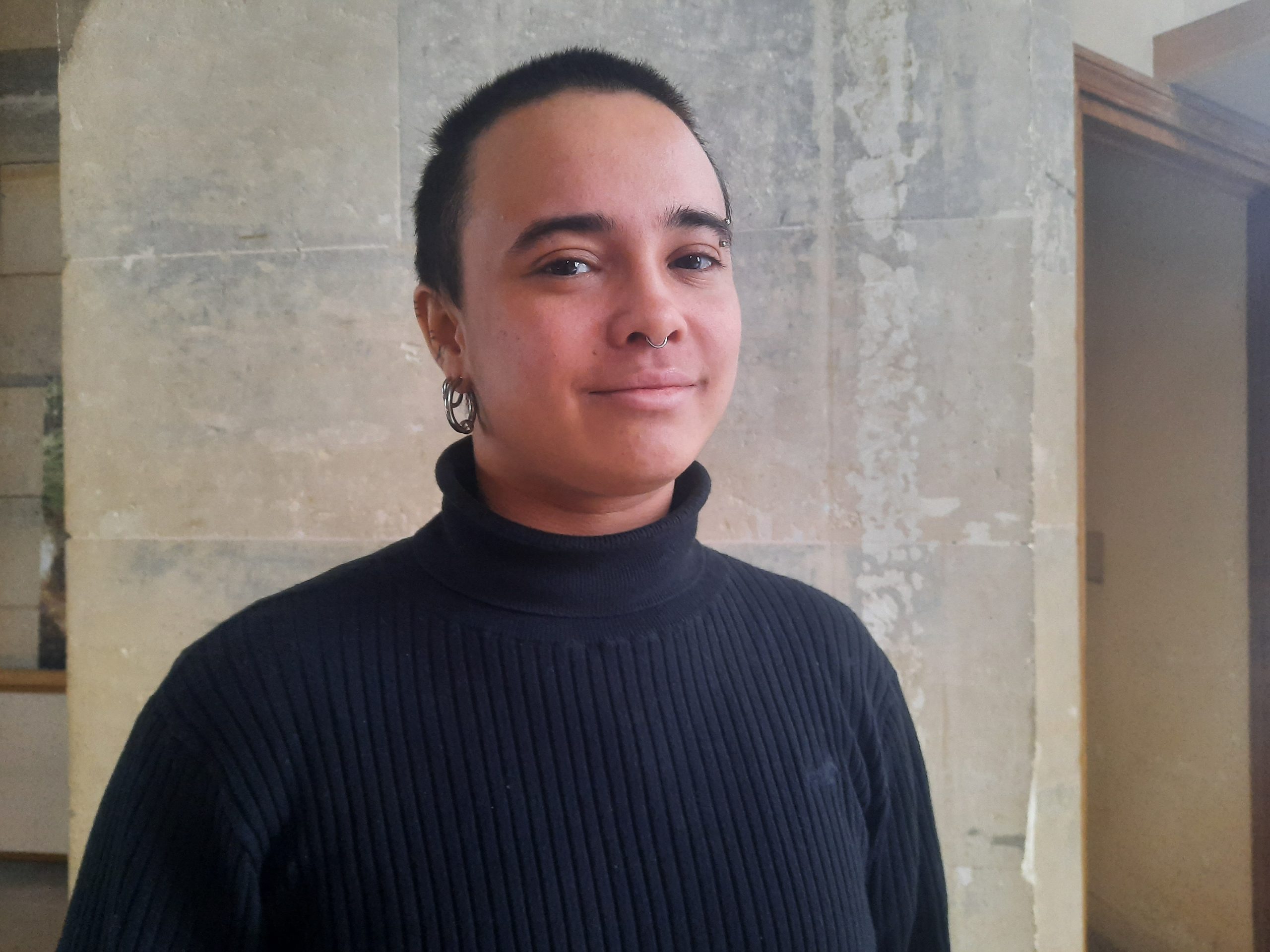
Somkeo Norindr is a digital project manager at the Paris Observatory. After a master's degree in art history from the Université Paris-Nanterre, he joined the Institut national d'histoire de l'art (INHA) to contribute to the digital development of the "Connoisseurs, Collectors and Dealers of Asian Art in France, 1700-1939" program through data engineering and visualization. He became interested in workflow automation for art history, and studied programming at the École nationale des chartes. His master's thesis focused on computer vision applied to historical sources, exploring possible applications of AI for the processing of digitized documents.
He joined the History of Sciences team of the Paris Observatory in 2023 as an engineer, to contribute to the development of a platform integrating computer vision algorithms. Somkeo is now in charge of the digital team of the ANR EIDA project, supervising the creation of digital tools to assist humanities researchers.
Simulating Emergence in Large-Scale Spatial Systems: A Cell-DEVS Approach

Head of the Advanced Real-Time Simulation Laboratory (V-Sim)
In recent years, new methodologies have allowed building agent-based simulation software executing on grid-shaped cell spaces. There have been numerous efforts integrating agents and cellular models for simulation, in which we can model agents that have emerging behavior that can represent intelligent systems. We have defined a new methodology for modeling such cell-based agent models using a formal modeling technique that permits defining each cell in a cell space as individual independent entity, called Cell-DEVS. The goal of Cell-DEVS is to build discrete-event cell spaces, improving their definition by making the timing specification more expressive and the definition of complex models simpler.
We will introduce the main characteristics of the Cell-DEVS formalism, and will show how to model complex cell spaces using this methodology. We will present different examples of application, and discuss open research issues in this area, focusing on models with emerging behaviour that can be used in AI applications.
We will then show some examples of the current use of DEVS, including applications in different fields. We will introduce an integrated environment that deals with these issues, orchestrating a cellular-based simulator (CD++), a GIS and data visualization, to simulate behavior and analyze results supporting the decision making for varied environmental scenarios. The limitations above are solved by adding raw simulation results into the georeferenced maps, associating many sources of information, providing a more powerful analysis experience.
The simulation model is fed by the GIS with updated data, while the model design process enables integrating additional information layers. The methodology uses a cellular modeling approach in which each cell is defined as a discrete event agent, and defines a procedure to couple cells evolving the state of the influenced neighbors. We will also discuss models of spiking neurons, data mining and market evolution, among others.
Gabriel A. Wainer received his Ph.D. degree (Hons.) from UBA/Université d’Aix-Marseille III, Marseille, France, in 1998. He is currently a Full Professor at Carleton University, Ottawa, Canada, where he is also the Head of the Advanced Real-Time Simulation Laboratory, Centre for Advanced Simulation and Visualization (V-Sim).
He is a member of the Board of Directors of the Society for Modeling and Simulation International (SCS), and a member of the Editorial Board of IEEE Computing in Science & Engineering, Wireless Networks (Elsevier), and The Journal of Defense Modeling and Simulation (SCS).
He is a co-founder of the Symposium on Theory of Modeling and Simulation, SIMUTools, and the Symposium on Simulation of Architecture and Urban Design (SimAUD). He is Editor-in-Chief of Simulation, Transactions of the SCS. Dr. Wainer is a Fellow of SCS and a Distinguished Speaker of ACM.
Interoperability, Simulation, and Digital Twins: New Frontiers for Collaborative and Distributed Systems
Director of SyCoIA Lab
Digital transformation has accelerated the need for robust, interoperable, and scalable modelling and simulation frameworks capable of supporting complex socio-technical systems. From Industry 4.0 to smart cities, organizations increasingly rely on digital twins and distributed simulation to anticipate system behaviour, evaluate decision scenarios, and continuously optimize operations.
In this keynote, I will explore the methodological foundations and practical enablers of interoperable simulation, with a focus on DEVS formalism, model continuity, executable architectures, and standards such as HLA. Particular attention will be given to the integration of simulation with AI-driven components, enabling intelligent orchestration, predictive behaviour, and automated adaptation within cyber-physical ecosystems.
I will discuss recent advances in hybrid approaches combining agent-based modelling, discrete-event simulation, and data-driven methods to support real-time, collaborative, and human-in-the-loop applications. Examples from European and international research projects will illustrate how digital twins are transforming engineering practices, industrial transformation, healthcare system management, and large-scale decision-making.
Finally, I will highlight open challenges and strategic directions for the next generation of distributed simulation environments—particularly regarding trust, interoperability, sustainability, and the alignment of digital twins with organizational knowledge and governance requirements.
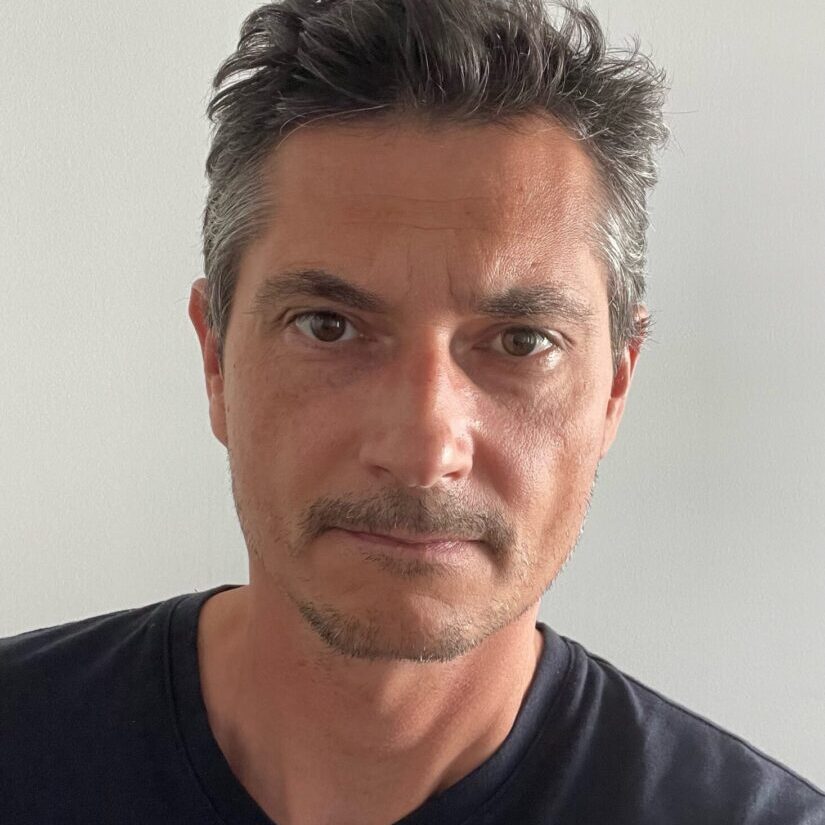
Gregory Zacharewicz is a Full Professor at IMT Mines Alès and a leading researcher in modelling, interoperability, and distributed simulation. His work focuses on the DEVS formalism, digital twins, agent-based simulation, HLA interoperability standards, and applications for Industry 4.0 and socio-technical systems.
He has coordinated and contributed to numerous international research projects involving academic, industrial, and governmental partners, with a strong emphasis on collaborative engineering, crisis management, and large-scale systems analysis.
He is currently the director of the SyCoIA lab and president of the Society for Modeling and Simulation International (SCS).